
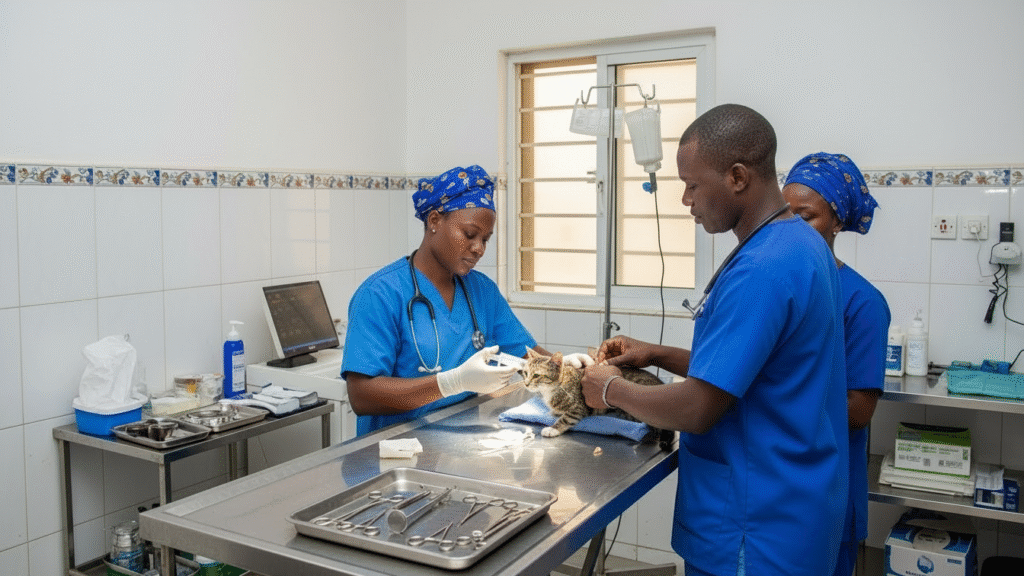

If you’re a pet parent in Nigeria, understanding cat spay/neuter practices in Nigeria is one of the most important steps toward giving your feline a healthy, comfortable life. Many cat owners know the procedure is necessary, yet they still worry about what truly happens before, during, and after surgery. Because Dulham works closely with cat owners across the country, we understand these concerns. So, this guide breaks everything down clearly and helps you feel fully prepared. As you’ll see, cat spay/neuter in Nigeria is simpler than many imagine, and it comes with long-term benefits for both your pet and your community.
Understanding Cat Spaying and Neutering in Nigeria
Spaying (for females) and neutering (for males) are routine surgical procedures that prevent cats from reproducing. Many people assume these operations are risky or painful, although modern veterinary care has made them extremely safe. You may also hear myths about cats losing their personality after being sterilized. Yet, most cats keep their charm while gaining major health benefits.
Across Nigeria, cultural beliefs sometimes lead owners to delay or avoid sterilization. In many cases, people feel cats should reproduce “at least once,” but this is not medically necessary. Because of this misconception, stray populations rise rapidly, especially in busy cities. Fortunately, clinics like Dulham Vet Clinic are educating more owners and making responsible pet ownership easier.
Why Spaying and Neutering Is Important for Cats in Nigeria
Sterilizing your cat is one of the best long-term health decisions you can make. Female cats are less likely to develop uterine infections and breast tumors after spaying. Male cats experience fewer prostate issues, and their risk of testicular cancer drops to zero. Plus, many unwanted behaviors improve significantly. For example, neutered males roam less, fight less, and spray less frequently.
Nigeria faces a growing stray cat problem in many states. Because stray cats reproduce quickly, communities struggle with disease spread, noise, and kitten abandonment. So, each time a responsible owner chooses sterilization, they reduce the number of homeless cats. Dulham Vet Clinic encourages this step because it directly improves animal welfare across the country.
RECOMMENDED:
Essential Cat Vaccines in Nigeria | Prices, Age & Where to Get Them
5 Common Viral Diseases of Cats in Nigeria
Maine Coon vs Persian Cat in Nigeria: Breed & Price Comparison
When to Spay or Neuter Your Cat
Most kittens can undergo the procedure between 4–6 months of age. However, adult cats can also be sterilized safely. Some owners wait because they want their cats to “grow bigger,” although this delay doesn’t offer any real advantage. If your vet notices any temporary health concerns, they may postpone the surgery. Otherwise, early sterilization is both safe and recommended.
What to Expect Before the Procedure
Before your cat is spayed or neutered, a veterinarian performs a physical exam and may request simple lab tests. These help ensure the cat can handle anaesthesia. You’ll be asked to withhold food overnight to prevent vomiting during sedation. Water is usually allowed until a few hours before the appointment.
Costs for cat spay/neuter in Nigeria vary by city. In Lagos, Abuja, and Port Harcourt, prices are generally higher. Smaller cities tend to be more affordable. Dulham Vet Clinic keeps prices transparent, so you always know what to expect before moving forward.
What Happens During the Spay/Neuter Procedure
Spay/neuter procedures take from 10-30minutes when carried out by an expert veterinarian. This means you can wait and go home the same day with your cat after they have been sterilized. Here’s what really happens; during surgery, your cat is given anaesthesia, monitored closely, and operated on using standard, safe techniques. Neutering (castration) is usually quick, while spaying takes a bit longer because it is a major surgery involving the removal of the female internal organs (ovaries and/or uterus). Although owners can feel nervous, your cat remains pain-free throughout the process.
Dulham Vet Clinic, carries out smooth spays and our trained staff ensure safety checks are followed every step of the way for pets. Contact us today to book an appointment.
Post-Surgery Care and Recovery
As mentioned earlier most cats wake up gently and return home the same day when conducted by expert verterinarians. They may be sleepy, but this is normal. You’ll need to limit jumping and running for several days. Medication (analgesic and/or antibiotics), if prescribed, keeps them comfortable. Feeding can resume within hours, although smaller portions are easier to digest at first. Licking the incision site should be prevented, so a cone may be necessary.
Call your vet immediately if you notice swelling, discharge, refusal to eat, or unusual aggression. Although complications are rare, quick attention helps your cat recover smoothly. Dulham Veterinarians offers follow-up support, so you’re never alone during recovery.
Finding Affordable and Reliable Spay/Neuter Services in Nigeria
Choosing the right clinic matters. Ask whether they use proper anaesthesia, monitoring equipment, and sterile instruments. You should also confirm that the clinic provides aftercare guidelines. Before booking, ask about the full cost, recovery expectations, boarding cost and any additional care your cat may need.
Myths, Concerns, and Facts About Cat Sterilization
Many owners believe that sterilized cats become overweight or lazy. Weight gain happens only when diet and exercise aren’t managed. Others think their male cat will “feel less masculine,” but cats don’t have human emotional connections to reproduction. Some also worry the procedure is too risky. In truth, when performed at a reputable facility like Dulham Vet Clinic, the procedure is incredibly safe.
Final Thoughts
Spaying or neutering is more than a routine procedure—it’s a commitment to your cat’s long-term well-being. Because cat spay/neuter in Nigeria helps prevent disease, unwanted litters, and behavioural challenges, it remains one of the most responsible choices any pet owner can make. Dulham Vet Clinic is always ready to guide you through the process.
Visit Dulham Vet Clinic today and give your cat the best start in life!
Phone Us
0806 632 9826
Visit Us
No. 10B Michael Olawale Cole Street, Lekki Phase One, Admiralty Way, Lagos.
No. 3 Isiokpo Street, Phalga, Port Harcourt
Mail Us
help@dulhamvetclinic.com
Join our WhatsApp Community – learn from other pet parents, and be the first to know about exclusive offers. Click to join the group
Frequently Asked Questions on Cat Spay/Neuter in Nigeria
1. What is the best age to spay or neuter a cat in Nigeria?
Most vets recommend spaying or neutering between 4–6 months, although healthy adult cats can be sterilized at any age.
2. How much does it cost to spay or neuter a cat in major Nigerian cities?
Prices vary. Cities like Lagos or Abuja are more expensive, while clinics in smaller towns usually cost less. Always ask your vet for a clear estimate.
3. How long does it take a cat to recover after being spayed or neutered?
Most cats recover within 7–14 days. Activity should be limited, and owners should monitor the incision site daily.
4. Is spaying or neutering safe for outdoor or community cats in Nigeria?
Yes. In fact, sterilizing outdoor cats helps reduce roaming, fighting, and uncontrolled breeding.
5. What are the signs of complications after a cat sterilization surgery?
Look for swelling, bleeding, discharge, refusal to eat, vomiting, or persistent lethargy. Contact your vet if any appear.
6. Does neutering stop male cats from roaming or spraying?
It reduces these behaviours significantly, although some cats may still show mild versions of them.
7. Are there low-cost cat spay/neuter programs available in Nigeria?
Dulham Veterinary Services offers the most affordable rates. Also, Veterinary teaching hospitals also carry out these procedures at reduced cost since they use cases like these to teach clinical undergraduates.
8. Will my cat gain weight after being spayed or neutered?
Weight gain is avoidable with proper diet and exercise.
9. Can an adult cat still be safely spayed or neutered?
Absolutely. Age is not a barrier if the cat is healthy.
10. How do I prepare my cat for a spay or neuter appointment?
Follow your vet’s instructions, which usually include overnight fasting, basic grooming, and early arrival on the surgery day.